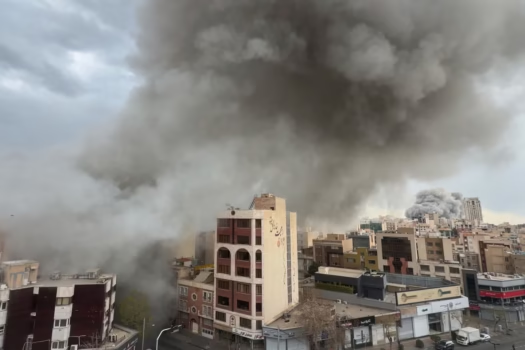
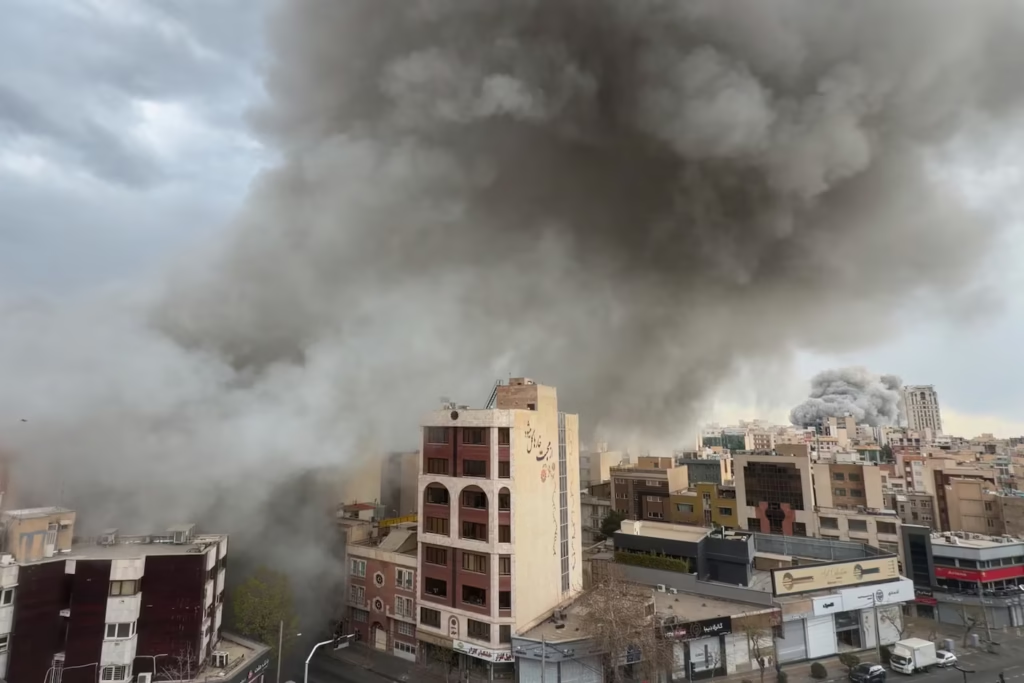
The United States has become deeply involved in the escalating conflict with Iran, marking one of the most significant military confrontations in the Middle East in recent years. The conflict intensified in late February 2026 when the U.S., working alongside Israel, launched coordinated military strikes against Iranian nuclear facilities and military infrastructure. U.S. officials argued that these actions were necessary to prevent Iran from developing nuclear weapons and threatening American allies in the region.
Since then, the conflict has expanded across the Middle East. U.S. forces have conducted airstrikes, targeted weapons sites, and deployed additional troops, warships, and aircraft to secure strategic areas like the Strait of Hormuz—a vital global shipping route for oil. These operations are intended to protect international shipping and limit Iran’s ability to project military power across the region.
The war has also taken a heavy toll. Hundreds of American service members have been wounded and several have been killed, while Iranian military targets and infrastructure have suffered significant damage. The fighting has spread beyond Iran, affecting countries across the Gulf and disrupting global energy markets and trade routes.
This conflict did not emerge overnight. The relationship between the United States and Iran has been tense for decades, dating back to events such as the 1953 coup supported by the U.S., the 1979 Iranian Revolution, and ongoing disputes over Iran’s nuclear program and regional influence.
As the situation continues to evolve, the world is watching closely. The outcome of the war could reshape the balance of power in the Middle East, influence global energy supplies, and affect international security for years to come.