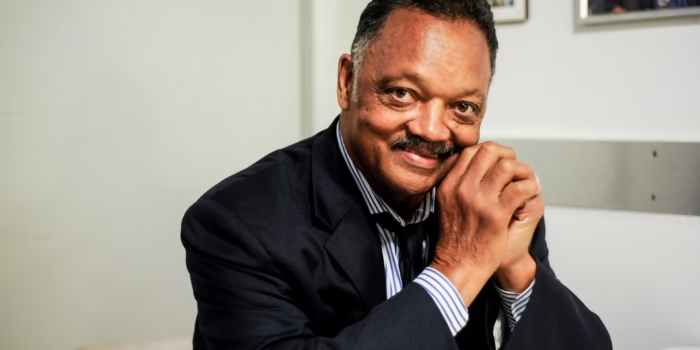
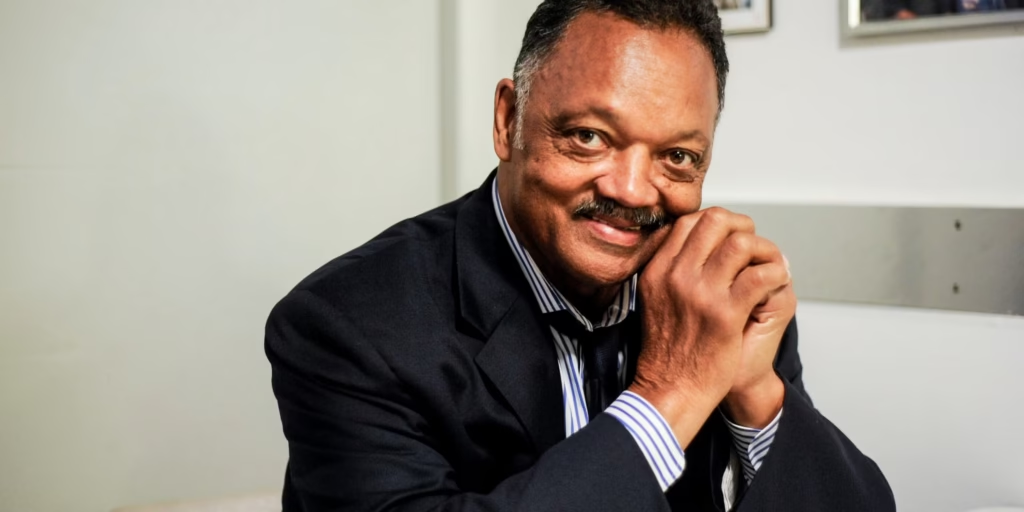
Rev. Jesse Jackson is one of the few people in contemporary American history who most effectively embodied the nexus of social justice and faith. His voice echoed across public squares, on picket lines, and in pulpits for decades, urging the country to uphold its best beliefs. Jackson was a preacher, activist, presidential contender, and unwavering supporter of equality. His life has been characterized by a single goal: to increase everyone’s access to opportunity and dignity.
Born in Greenville, South Carolina, Jackson gained notoriety as a personal friend of Dr. Martin Luther King Jr. and was influenced by the moral fervor of the Civil Rights Movement. With his own unique approach, which was equal parts organizer’s resolution and preacher’s cadence, he continued that tradition. From establishing the Rainbow Coalition and Operation PUSH to leading historic presidential campaigns in the 1980s, he pushed Americans to envision a more expansive, inclusive democracy.
Faith was at the heart of Jackson’s message. He frequently described hope as a discipline—a daily decision to hold onto the belief that justice can triumph even in the face of overwhelming odds—rather than as wishful thinking. He maintained that common people, with a common goal, could influence history, whether they were fighting for international human rights, labor justice, voting rights, or educational access.
There has been dispute and intricacy along the way. However, even detractors have recognized the extent of his impact and the opportunities he enabled for upcoming leadership generations. From the 1960s marches to the 21st-century multicultural coalitions, he served as a link across eras for many. His efforts contributed to the normalization of the notion that Americans from all backgrounds should be able to hold positions of authority, including the presidency.
What most strikes me when I think back on Rev. Jesse Jackson’s life is his steadfast faith in the strength of moral fortitude and group effort. He reminded us that democracy demands involvement, perseverance, and a desire to support one another; it is not a spectator sport.
His words, “Keep hope alive,” reverberate as communities continue to consider his impact. It was not just a catchphrase. It served as both a guide for the future and a wake-up call. And it continues to be a worthy homage to a man whose life’s work pushed a country to become more compassionate, just, and cohesive.