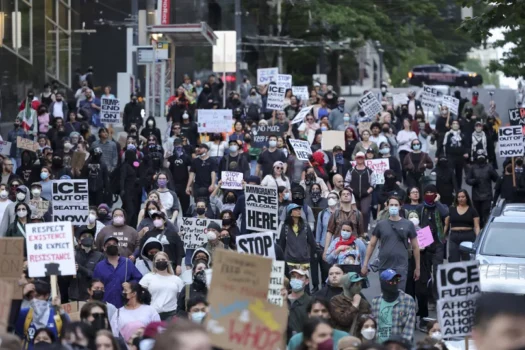
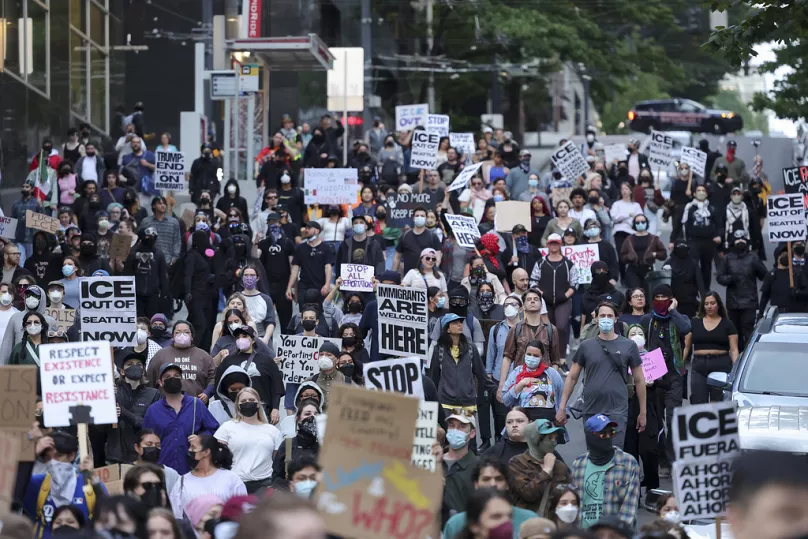
Large demonstrations have taken place across the United States in recent days, drawing thousands of people into the streets in cities from coast to coast. The protests are part of a growing wave of political activism as Americans express their views on government policies, social issues, and the direction of the country.
While protests are nothing new in American history, the scale and intensity of the current demonstrations highlight just how passionate many people feel about the political climate today.
Why People Are Protesting
Many of the nationwide demonstrations have centered on disagreements over government policies and political leadership. Protesters have raised concerns about a wide range of issues, including immigration policies, economic concerns, civil rights, and international conflicts.
Some protesters say they are demonstrating to push for changes in leadership or policy, while others see the protests as a way to defend democratic values and ensure that their voices are heard.
In several cities, rallies have been organized by advocacy groups and grassroots organizations calling for increased accountability from political leaders.
Major Cities See Large Crowds
The protests have taken place in several major cities across the country, including:
- Washington, D.C.
- New York City
- Los Angeles
- Chicago
- Atlanta
- Minneapolis
Crowds in some locations have reached thousands of participants, with demonstrators marching through city streets, gathering in public squares, and holding rallies outside government buildings.
Many protesters carried signs and chanted slogans related to the issues they believe are most important.
The Role of Social Media
One major factor behind the rapid spread of the protests has been social media. Platforms like Instagram, TikTok, and X (formerly Twitter) have helped organizers quickly spread information about protest locations, times, and messages.
Videos and photos shared online have also amplified the demonstrations, bringing national attention to events that might otherwise remain local.
Social media has increasingly become a key tool for modern activism.
Peaceful Demonstrations and Public Response
Most of the demonstrations have been peaceful, with protesters exercising their right to assemble and express their opinions. Law enforcement agencies in several cities have worked to manage crowds and ensure safety for both demonstrators and the public.
Political leaders and public officials have responded in different ways. Some have defended the right to protest as an essential part of democracy, while others have criticized the demonstrations or the issues being raised.
A Long Tradition of Protest in America
Protest movements have played a major role in shaping American history. From the civil rights movement of the 1960s to demonstrations against wars and economic inequality, public protests have often been a catalyst for social and political change.
Many activists participating in today’s demonstrations say they see themselves as part of that long tradition.
What Happens Next?
It remains unclear whether the current protests will lead to immediate political changes. However, they are already influencing public debate and drawing attention to the issues that matter most to the people involved.
With major elections approaching and political tensions remaining high, nationwide demonstrations could continue in the coming weeks.
Final Thoughts
The recent protests across the United States show that political engagement remains strong. Whether people are marching in the streets, organizing online, or speaking out in their communities, many Americans are making their voices heard.
In a democracy, public participation and debate are essential. These demonstrations are another reminder that citizens continue to play a powerful role in shaping the nation’s political conversation.