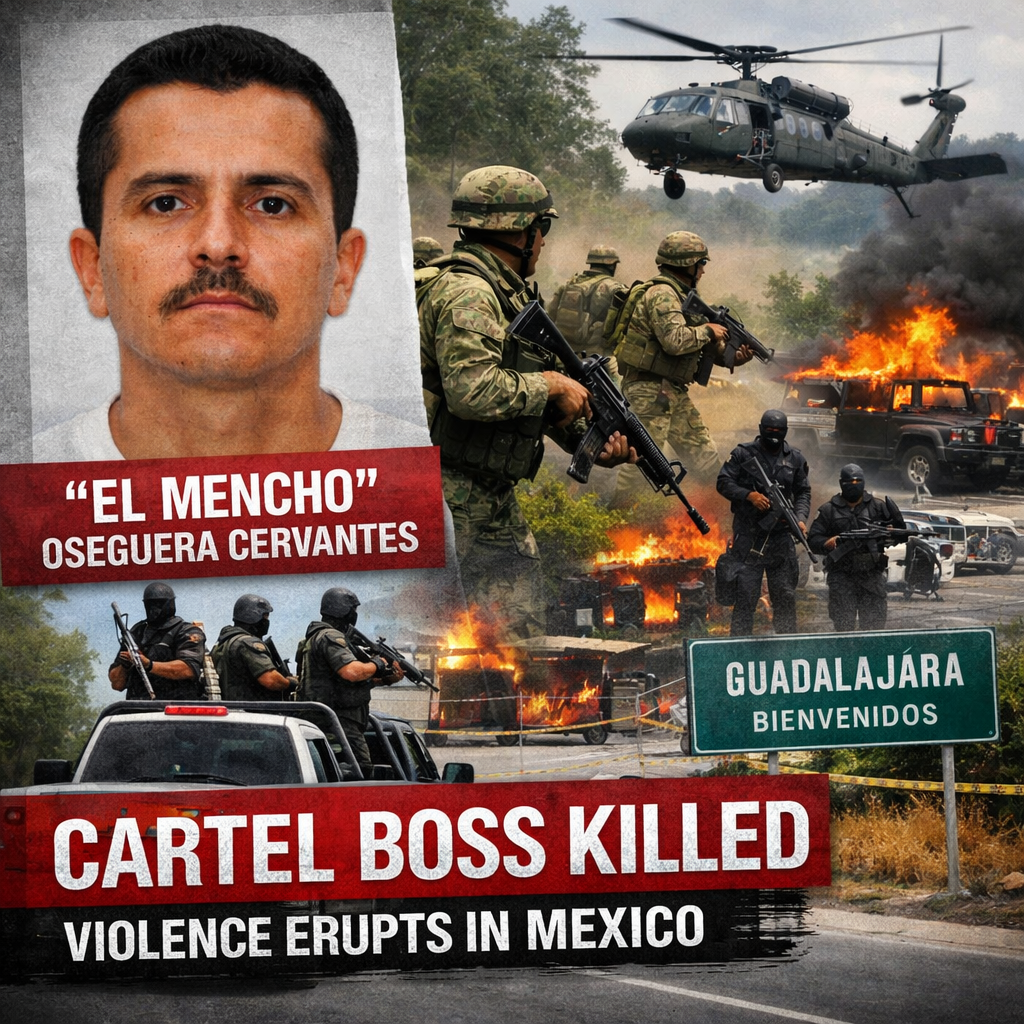
In a dramatic and violent chapter of Mexico’s ongoing fight against organized crime, Nemesio “El Mencho” Oseguera Cervantes, the notorious leader of the Jalisco New Generation Cartel (CJNG), was killed by Mexican security forces on Feb. 22, 2026 during a military operation in Tapalpa, in the western state of Jalisco. The operation, which involved federal troops and intelligence support, marked the end of one of the most powerful and elusive cartel bosses in recent Mexican history.
El Mencho’s death, hailed by government officials as a major victory in the war on drug trafficking, quickly triggered a wave of retaliatory violence. Across numerous states — including Jalisco, Guanajuato, Michoacán, and others — cartel affiliates responded with burning vehicles, roadblocks and armed clashes with security forces. In Guadalajara, one of Mexico’s largest cities, residents reported a near-shutdown as businesses closed, transport lines were disrupted and civilians stayed indoors amid unrest.
The shockwaves went beyond street battles: schools were closed in several regions, airports temporarily halted operations due to security concerns, and both Mexican and foreign governments issued warnings to their citizens. The chaos underscored the entrenched power of the CJNG and the risks that remain even after eliminating its top leader.
For Mexico, the killing of El Mencho represents both a symbolic triumph and a sobering reminder of the challenges ahead. While it removes a central figure in drug trafficking and fentanyl smuggling — a key concern for authorities on both sides of the U.S.–Mexico border — the ensuing disorder highlights how deeply cartel influence has woven into local communities and criminal networks.
As security forces work to stabilize affected regions, the focus now turns to who will fill the power vacuum within the CJNG and how the Mexican state will address the ongoing threat of organized crime without further destabilization.